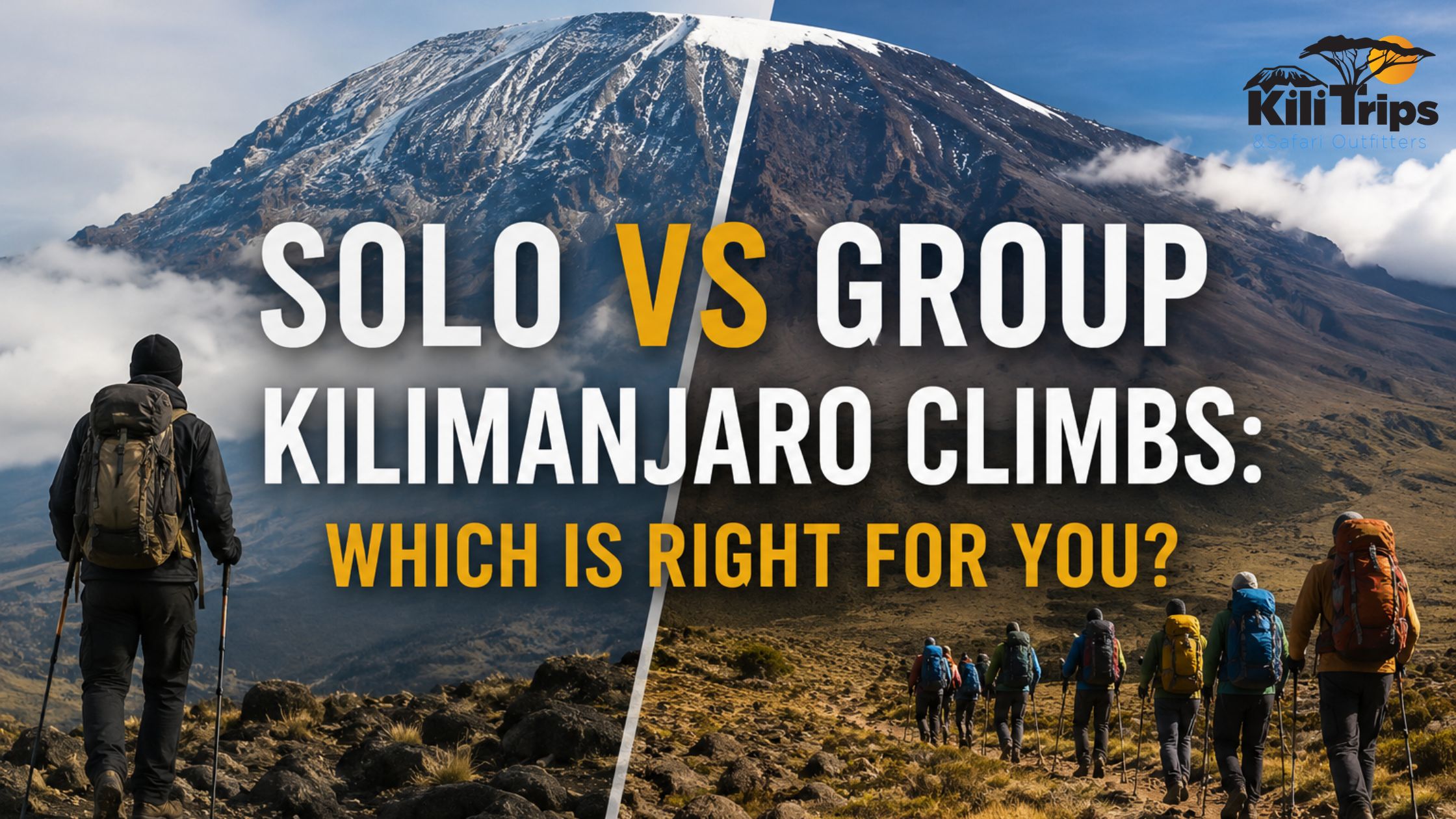
Choosing between solo and group climbing on Kilimanjaro can be very important to your success. There is a lot of confusion about which is best for many climbers. Moreover, solo vs group Kilimanjaro climbs both offer unique advantages and challenges. So it's important you know the difference and make the appropriate choice. Besides, the selection will influence the safety, cost, and experience quality.
Solo Climbing Benefits:
Group Climbing Benefits:
Solo Climbing Challenges:
Group Climbing Challenges:
Pricing Comparison:
Solo climb (7-day Machame route): $2,100-2,500 per person
Group climb (7-day Machame route): $1,400-1,700 per person
Overall, the solo private experience ranges 20-40% higher in cost than the solo public experience.
Share transportation, porter, and professional guide expenses.
Additional costs: Solo climbers tip separately on their own
Solo climbers spend a great deal more per person for more privacy and flexibility. But group climbs are great for those on a budget. Hence, your monetary circumstance plays a significant role in this choice.
The statistics indicate that only 65% of the climbers of Kilimanjaro reach the summit as a whole. Professional support and encouragement are essential to the success of group climbers. Sometimes solo climbers have motivation and altitude issues. But veteran solo climbers report greater personal achievements.
Real-World Scenarios:
Built-in accountability and support systems with group climbs. Solo climbs require a lot of self-motivation and endurance along the way. Hence, it is important in the selection of your personality.
Solo vs group climbs to Kilimanjaro are both great mountain experiences. Solo climbing is ideal for those who are capable of climbing alone and looking for a challenge for personal growth and solitude. Climbing together is for first-time climbers, people with limited budgets, and those who want to connect with different people for common interests and safety.
Take the time to think about your experience, budget, personality, and climbing objectives. In either case, solo vs group Kilimanjaro climbs, make sure you are prepared and trained for the adventure, and only hire reputable operators. You can also explore Why Mount Kilimanjaro Trekking Is a Dream Adventure for Travelers
Ready to Conquer Kilimanjaro? Make a booking today!
Don't wait any longer for your Kilimanjaro adventure. Now is the time to invest in reputable operators and select your climbing style. You are ready to conquer your African summit – alone or in a group! Begin your awesome trip now and make memories of the mountains that will last a lifetime!
Q1: Can beginners climb Kilimanjaro solo safely?
Yes, however, group climbs are recommended. Guides also help beginners and motivate them in challenges.
Q2: Do climbs with one person have higher success rates?
On the contrary, group climbing success rates are higher! Motivation of the groups, expert guiding, and successful summits.
Q3: Does solo climbing pose a greater threat than group climbing?
Solo climbs are riskier in the absence of immediate help. Group climbs offer a safety net and experienced guides and companions to guide.
Q4: What are the savings of a group?
Group climbs are 20-40% lower in price than solo climbs. There are several climbers to share the cost and reduce the cost for each individual.
Q5: Will I feel lonely on a group climb?
No, you will meet 8-10 climbers and get to know them. Group expeditions allow many climbers to make lasting friendships.

Community Support
We invite you to travel with us if you wish to do it with a firm that directly, openly, and favorably impacts Tanzania.
Tanzania
Email us: safaris@kilitrips-tz.com
Call us: +255 684 553 625
North America
WhatsApp +1 819 856 5091
Quebec, Canada
© Copyright 2010 - 2025 Kili Trips & Safari Outfitters Ltd - All Rights Reserved