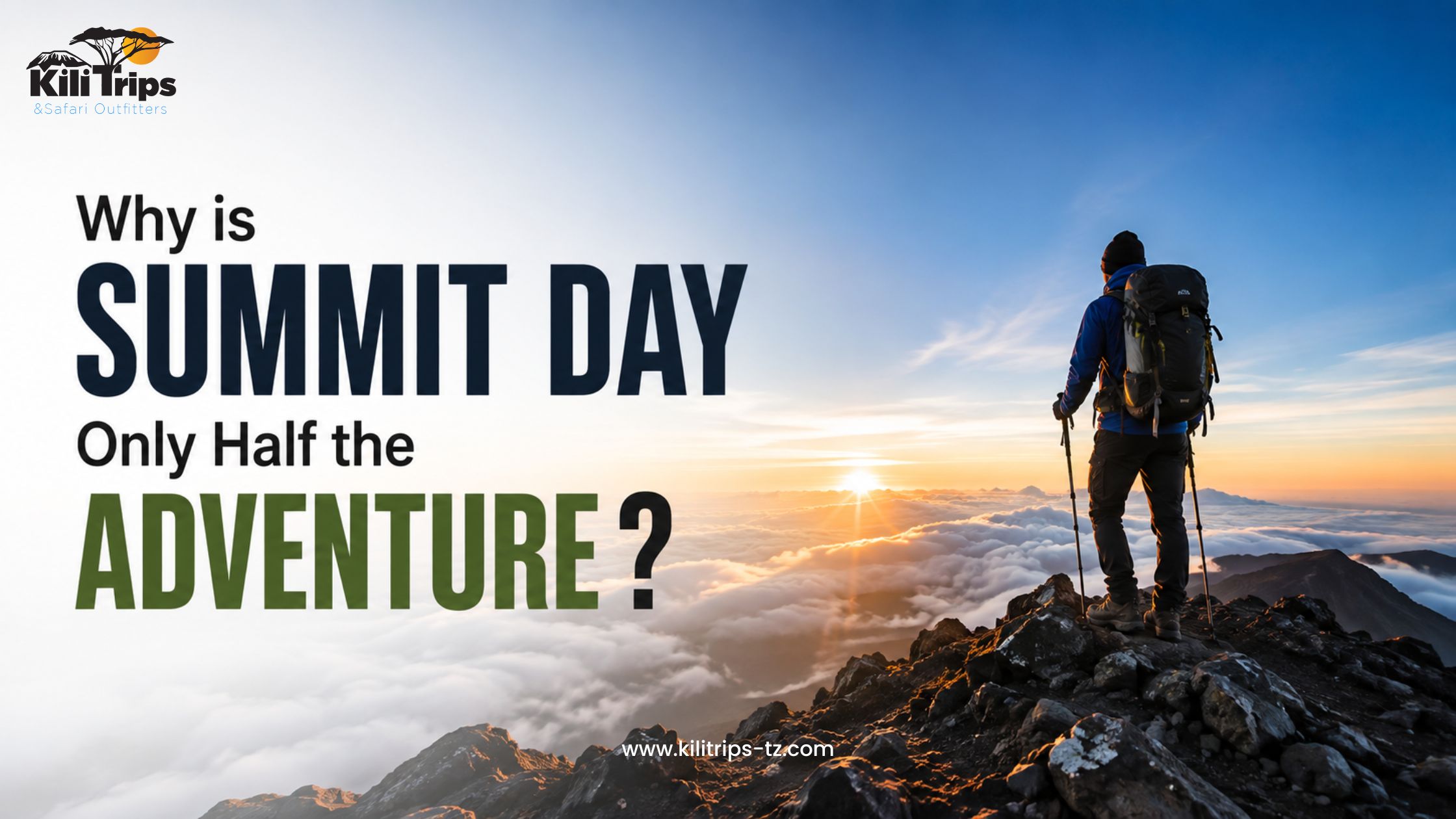
In planning Mount Kilimanjaro Trekking, the majority of the time all the focus is immediately on summit night - the frozen pre-dawn hustle, the switchbacks of scree, the instant you lay your hand on Uhuru Peak. Anyone who has literally done Mount Kilimanjaro Trekking will tell you otherwise: the summit is but half the tale. The days that precede it and the descent that follows it influence the experience just as much or more.
This blog dissects the reasons why the journey around the summit day is something that deserves as much respect, planning, and appreciation as the summit push itself.
The day of the summit gets all the glory as it is dramatic: cold, dark, emotional, and photogenic. But it is actually the last 10 percent of a considerably longer process of body and mind. It is during the five to seven days before it that your body is getting used to it, your mind is getting used to the stress of altitude, and your team is developing the rhythm that will eventually get you to the top.
Such is what happens before you see the summit:
Unless these preceding phases are correct, summit night does not occur at all--or it occurs abjectly.
The actual driving force of a successful climb is acclimatization. Most of the routes are planned on the principle of climb high, sleep low, as the days of trekking are not as insignificant as they are often thought.
The Value of Slow, Steady Days
Short commutes a day are not about slacking; it is a tactic. Traveling at a slow pace through the rainforest, moorland, and alpine desert regions will afford your lungs and red blood cells time to adapt to the declining oxygen levels.
This is where Mount Kilimanjaro Trekking stands out as more than just a hike. It's not about speed. It involves patience, taking it slow, and allowing your body to acclimatize to the elevation before it is put to the test at 5,000+ meters.
Some of the value-adds of these early days:
This is where the downward part is, nearly no one speaks of. Uhuru Peak is an emotional experience, but you still have half a day of summit day ahead of you. Once they have celebrated at the summit, climbers have to start making an immediate descent, sometimes of up to six or eight hours, on fatigued legs, low oxygen, and minimal sleep.
Climber observations indicate a trend:
Indicatively, most trekkers report summit night to be a cold, tough experience, though recall the downslope as the most physically challenging experience of the whole journey, just because they feel too tired.
One of the most typical mistakes during the Mount Kilimanjaro Trek is preparing just for the final push. A wiser way is to consider the whole route, up and down the mountain, as a single challenge.
Practical ways to prepare:
The operator used is also important in this case; pacing, porter support, and route selection will make or break the experience of how easy the whole trip will be, not just the last ascent.
Summit day is not the end; it is the beginning, but memorable. The days leading up to it are quiet and constant, and make you strong enough to reach the top, and the days after it make you leave everything you have left to test. The success of the True Mount Kilimanjaro Trekking is based on the reverence of each phase of the climb, not only during the last few hours.
Ready to Have the Complete Kilimanjaro Adventure?
When going on your personal Mount Kilimanjaro Trekking adventure, make sure you pay attention to the whole path, not only to the view of the mountain top. Select an operator you can rely on, practice the entire trip, and allow yourself time to acclimatize. Patience is much more rewarded on the mountain than speed.
Q1: Is Mount Kilimanjaro Trekking the toughest during the summit night?
It is the highest and coldest, but most climbers are physically challenged with the descent that follows due to the fatigue that builds up.
Q2: What is the number of days a Kilimanjaro trip should last?
The majority of good routes take 6-9 days, and longer routes have a greater acclimatization and success rate.
Q3: How come slower routes are more successful in their summits?
The time taken by slower routes will enable the body to adjust more, thereby alleviating altitude sickness and enhancing stamina in general during the summit night.
Q4: What is not the summit night training that I should focus on?
Pay as much attention to downhill stamina, hydration, and multi-day stamina - not uphill fitness.
Q5: Can beginners do Mount Kilimanjaro Trekking?
Yes, with some training, a more gradual acclimatization path, and an experienced team of guides, first-time hikers can complete the trek successfully.

Community Support
We invite you to travel with us if you wish to do it with a firm that directly, openly, and favorably impacts Tanzania.
Tanzania
Email us: safaris@kilitrips-tz.com
Call us: +255 684 553 625
North America
WhatsApp +1 819 856 5091
Quebec, Canada
© Copyright 2010 - 2025 Kili Trips & Safari Outfitters Ltd - All Rights Reserved